


A few weeks ago, I wrote about the psychological pull of £5. The round number that so many bp shareholders had been waiting for. The arbitrary milestone that somehow felt more meaningful than £4.87 or £5.03.
Then, in the last piece, we talked about dividends, total return, and whether income changes the fundamental argument for diversification.
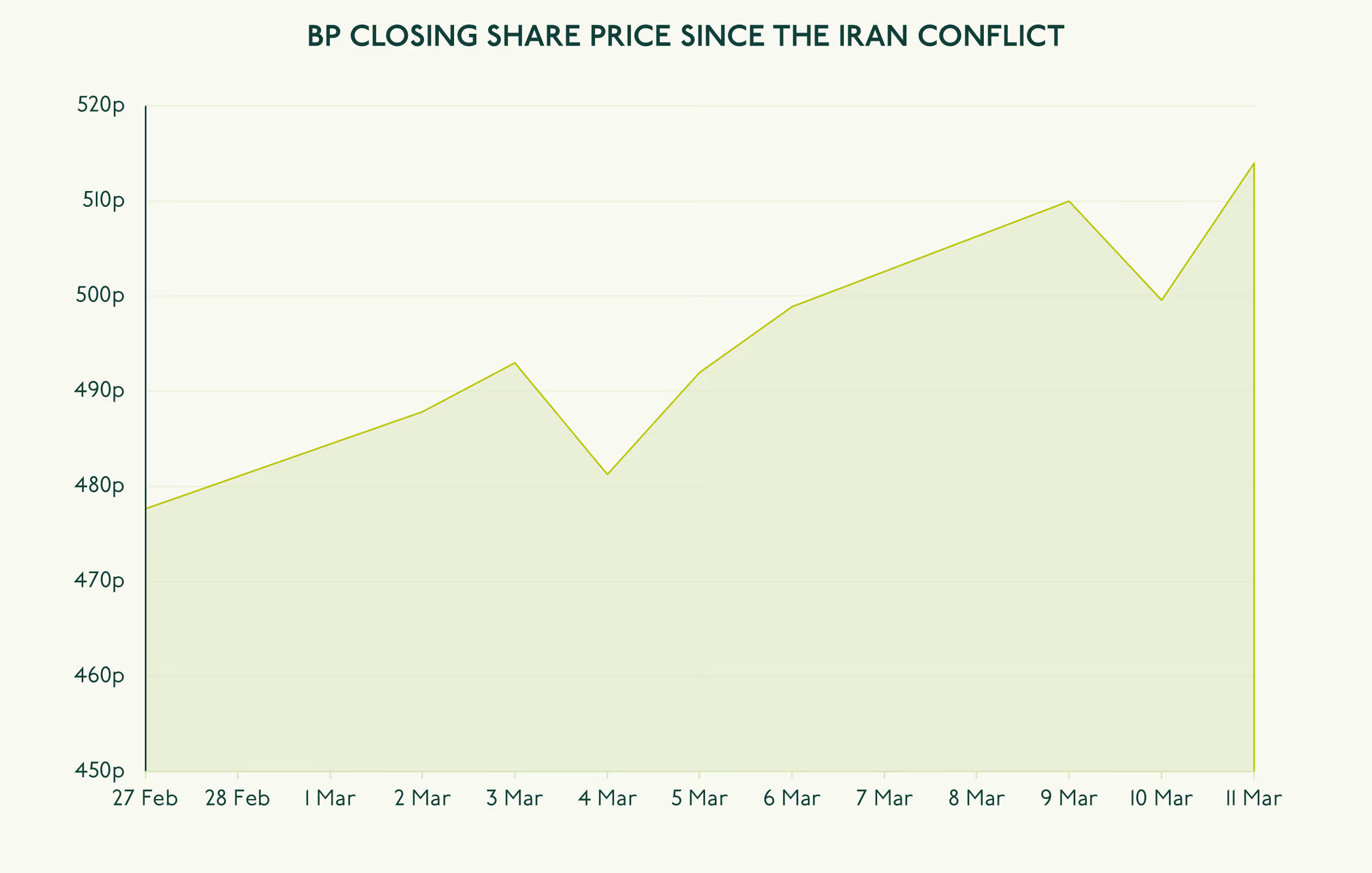
This week, I want to return to the share price question. Because bp shares hit £5 in early March, reaching £5.15 at the time of writing, the highest they’ve been since April 2024.
What drove bp shares to hit £5?
Let’s be clear about this, because it matters for how you think about what comes next.
The dominant factor is the Iran war and what it has done to the oil price. On 28 February, the US and Israel launched strikes on Iran. Iran has retaliated by effectively closing the Strait of Hormuz, the narrow waterway through which roughly 20% of the world’s oil supply normally passes. The oil price, which had been sitting in the $60-$70 range earlier this year, surged past $100 a barrel within days. At one point it briefly touched nearly $120.
When the oil price moves like that, bp moves with it. That relationship is simple, well-established, and hasn’t changed. bp’s share price has responded accordingly.
Is Elliott Management’s stake in bp also a factor? It’s possible that activist investor involvement contributed to some of the share price increase since they took their stake, as markets often re-rate on speculation about what changes might follow. But the jump since 28 February is almost certainly driven by oil prices. This is supported by bp’s fourth quarter and full year 2025 results, released in February, which caused the share price to fall nearly 4% on results day. The company suspended its share buyback programme and reported a Q4 net loss. It wasn’t the results that pushed bp shares to hit £5. It was Iran.
What bp shares hitting £5 means for shareholders
It means the move is real but it’s largely externally driven. The Strait of Hormuz situation could shift quickly. A diplomatic resolution, a reopening of shipping lanes, a release of strategic reserves. Any of these could take the oil price back down, and bp’s share price with it. The IEA has already announced the largest emergency reserve release in history in an attempt to cool prices.
We’re not predicting a reversal. Nobody can. But it’s worth understanding what you’re actually betting on if you decide to hold on a little longer.
At one extreme, a swift end to hostilities could see oil retreat and bp pull back below £5. At the other extreme, a prolonged conflict with the Strait effectively closed could push oil towards $150, with bp’s share price rising further on sustained high prices. Both are possible. Neither is guaranteed.
The behavioural side of bp shares hitting £5
Here’s where it gets interesting.
Psychologists describe something called the “aspiration treadmill”, the well-documented tendency for people to adjust their expectations upward as they achieve each new level of success. The target that was supposed to bring satisfaction becomes the new baseline, and a new target appears just beyond reach.
In investing, this plays out in a very specific way. When a share price is below your target, the psychology is one of patient waiting. “We’ll sell at £5.” But when it actually gets there, something shifts. “Maybe it’ll go to £5.50.” Or: “With oil at these levels, now’s not the time to sell.” The finish line moves. The round number that was going to trigger action becomes the starting point for a new round number.
This is entirely human. And it’s worth naming it for what it is.
The risk is repeating the cycle. Some people were waiting for £4.50. It came. They held out for £5 instead. Now bp shares have hit £5, and the target shifts again to £5.50. The pattern continues, and the sale never happens.
The question that actually matters
If you had a plan and you said to yourself, “when bp shares hit £5, I’m going to diversify a portion of my holdings”, then now is the moment to revisit that plan honestly.
It might also help to think about this: would an increase to £5.50 or a drop to £4.50 make more of a difference to your financial situation? How comfortable are you with either of those outcomes? That can tell you a lot about whether you’re genuinely comfortable with the concentration risk you’re carrying.
If your answer is “the price might go higher,” that’s not a plan. That’s hope. And as we’ve said before, hope is not a financial strategy.
If your answer is “my circumstances have genuinely changed, and I’ve thought it through carefully”, well that’s a different conversation, and a legitimate one worth having properly.
But if your answer is “I just feel like holding on a bit longer” it’s worth sitting with that feeling for a moment. Because that’s exactly the feeling we described in February. And it tends to feel the same whether the price is £4.50, £5.05, or £5.50.
The bp share price series
When I wrote the first piece about round numbers back in February, I didn’t plan it as a series. bp was flirting with £4.79 and I had no idea a war in the Middle East was around the corner. But here we are, three pieces in, bp shares have hit £5, and I’ll take the timing. Sometimes it’s better to be lucky than good.
The question hasn’t changed. What does your financial plan actually need?
That’s not rhetorical. If you’d like to work through it, we’re here.
Who can you think of that’s been waiting for bp shares to hit £5? Share this article with them.
Want to receive more insights like this directly in your inbox? Sign up to our bp Insights newsletter for regular updates and analysis specifically for the bp community, based on our 25+ years of experience.
Want to learn more about how we help bp Leaders optimise their finances? Explore our bp services page here. If you’d like to discuss your specific situation, you can get in touch with our team directly.
This is for educational purposes only. It’s not personal investment advice and we’re not recommending any specific course of action. Everyone’s situation is different, and decisions about shareholdings and diversification depend on individual circumstances including your financial position, risk tolerance, and personal objectives. You should consider seeking professional financial advice before making decisions about your investments.
While we have extensive experience helping bp employees and alumni optimise their benefits, Emery Little operates independently and is not affiliated with or endorsed by the bp group, including BP Pension Trustees Limited, on behalf of the BP Pension Fund. This allows us to provide objective, independent guidance focused solely on your best interests.


