


Every time Westminster erupts, the same question surfaces: should you change your investments because the government is changing? Analysis of every UK general election since the FTSE All-Share was created in 1962 points to a clear answer. There’s no evidence the stock market performs better with any particular party at the helm over the lifetime of a government. The same pattern holds in the US across nearly a century of presidential terms.
I was given a vivid reminder of why this matters on a staircase in Number Ten.
The staircase at Number Ten
A few weeks ago I was lucky enough to have a private tour of Number Ten. An old neighbour of ours, who has become a good friend, is part of the secretarial team there, and she arranged for us to come in on a Sunday.
The tour was fascinating in all the ways you’d expect. We stood in the garden where that famous photograph was taken during Covid. We sat in the Cabinet Room, that long table where the most consequential decisions in British political history have been made. And while I was taking that in, our daughters were just on the floor, laughing and playing. Which is comfortably the most sensible thing to happen in that room for quite some time.
But the thing that stayed with me most was the staircase.
Every prime minister to have served in Number Ten has their portrait on the stairs, running from the bottom all the way to the top. The tradition, apparently, is that when a new prime minister arrives, someone has to go along and nudge every single portrait down one to make room at the top. It is, by any measure, a thankless task. But in normal times, a manageable one.
When we got to the top of the staircase and looked at how tightly packed the portraits had become in the last few years, we all laughed. Four prime ministers in roughly two years at one point. Given the pace of British politics lately, whoever is responsible for moving those portraits along is unlikely to be resting for long.
What the data shows
Analysis of every UK general election since the FTSE All-Share was created in 1962 shows a broadly consistent picture. There is no evidence to suggest the stock market performs better with any particular party at the helm over the lifetime of a government. When you plot UK market performance against which party was in power across decades, the trend looks broadly similar irrespective of who is governing.
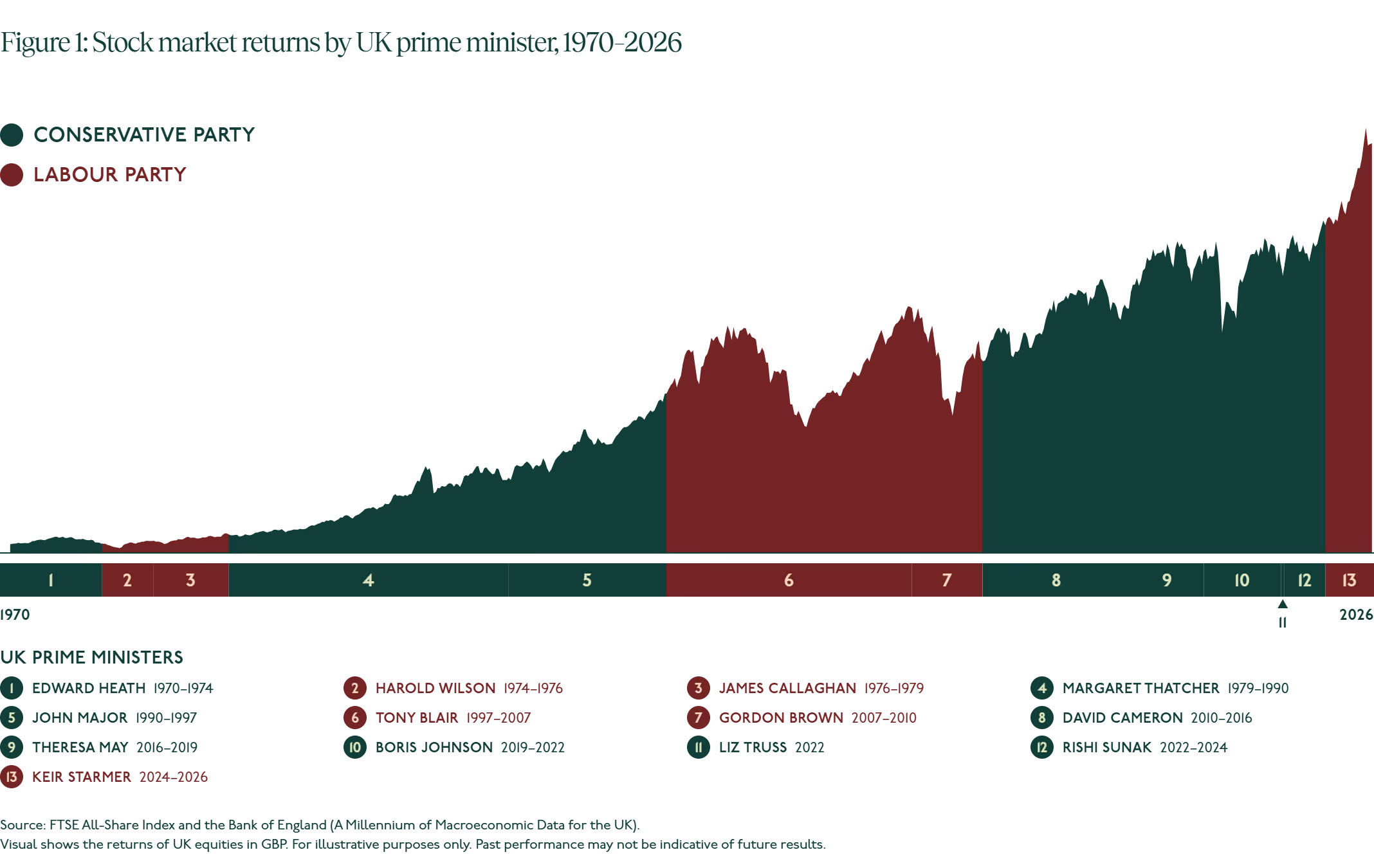
The same pattern holds in the US across nearly a century of presidential terms.
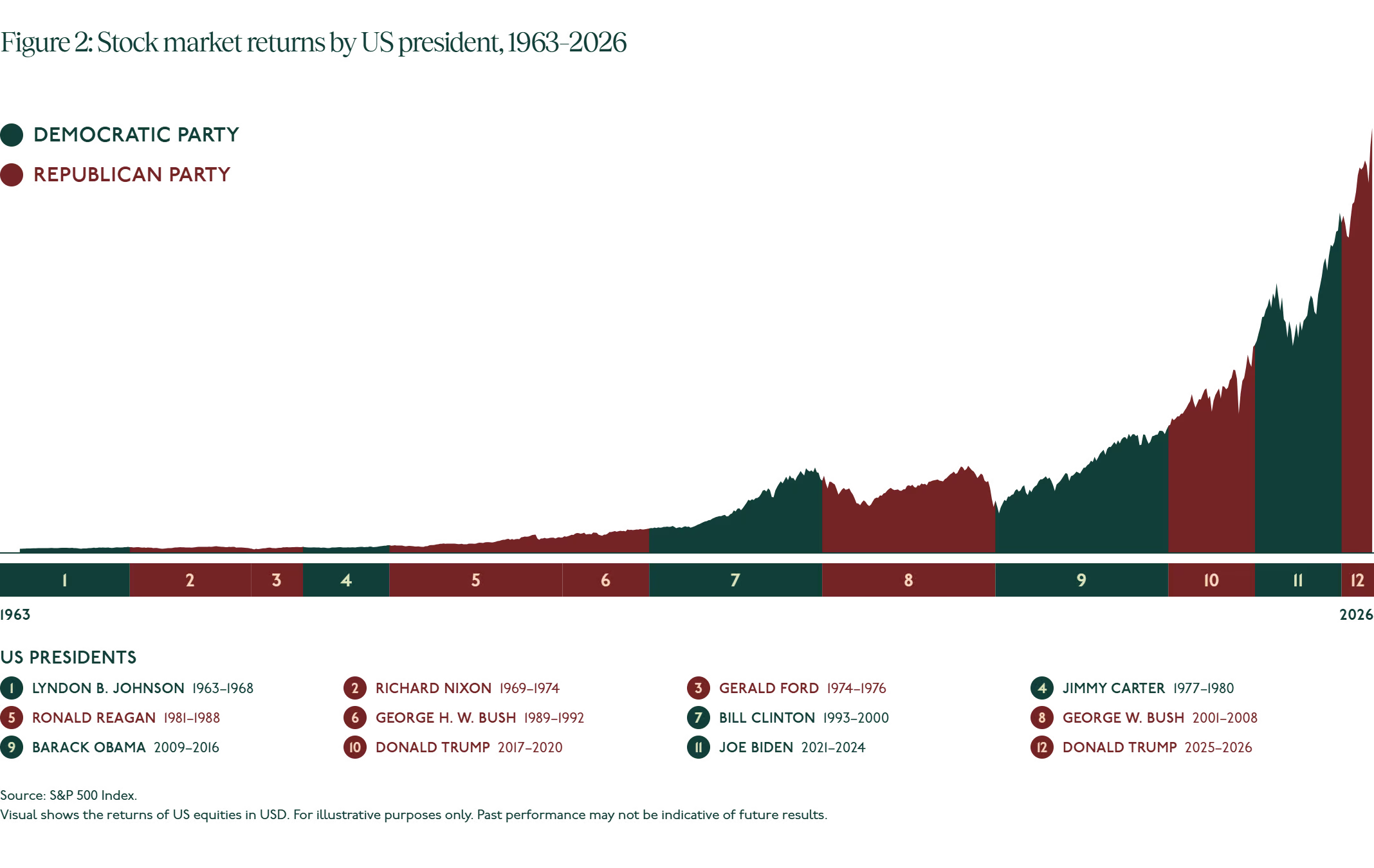
Governments come and go, crises arrive, leaders resign, and the long-term line continues doing what long-term lines tend to do.
Why markets don’t care who’s in power
The reason for this is not mysterious. The long-term drivers of market returns (corporate earnings growth, technological change, the compounding of value over decades) operate on timescales that make any single parliament look brief.
Should you change your investments when the government changes?
None of that means politics is unimportant. Of course it matters who runs the country. But that’s a different question from whether you should be making changes to your investment portfolio because the government is changing.
The answer to that question is almost always no.
Most of our clients know this already, partly because it’s something we talk about a lot. But it’s understandable if political noise feels unsettling. The coverage is relentless, and it’s designed to feel urgent. The reminder is simply this. Your financial plan was not built around a particular prime minister staying in post.
Whoever ends up at the top of that staircase when the current chapter closes, the principles that underpin good long-term investing will remain exactly the same.
This is for educational purposes only. It’s not personal financial advice and we’re not recommending any specific course of action. Whether or not to make changes to your investment portfolio depends on individual circumstances. You should seek professional financial advice before making any decisions.


