


SpaceX is preparing to list on the stock market in what could be the largest Initial Public Offering (IPO) in history. Anthropic and OpenAI are expected to follow later this year.
The question clients have been asking is: what does this mean for my portfolio? The answer is more involved than the headlines suggest, and it comes down to three things: how much of each company is actually available to buy, the rules that govern how quickly they enter market indices, and how systematic fund managers invest.
Free float
Not all of a company’s shares become available to the public when it lists. The “free float” is the portion that can actually be bought and sold on the market. For SpaceX, that’s expected to be around 5% of the total company. The remaining 95% stays with founders, employees, and other stakeholders.
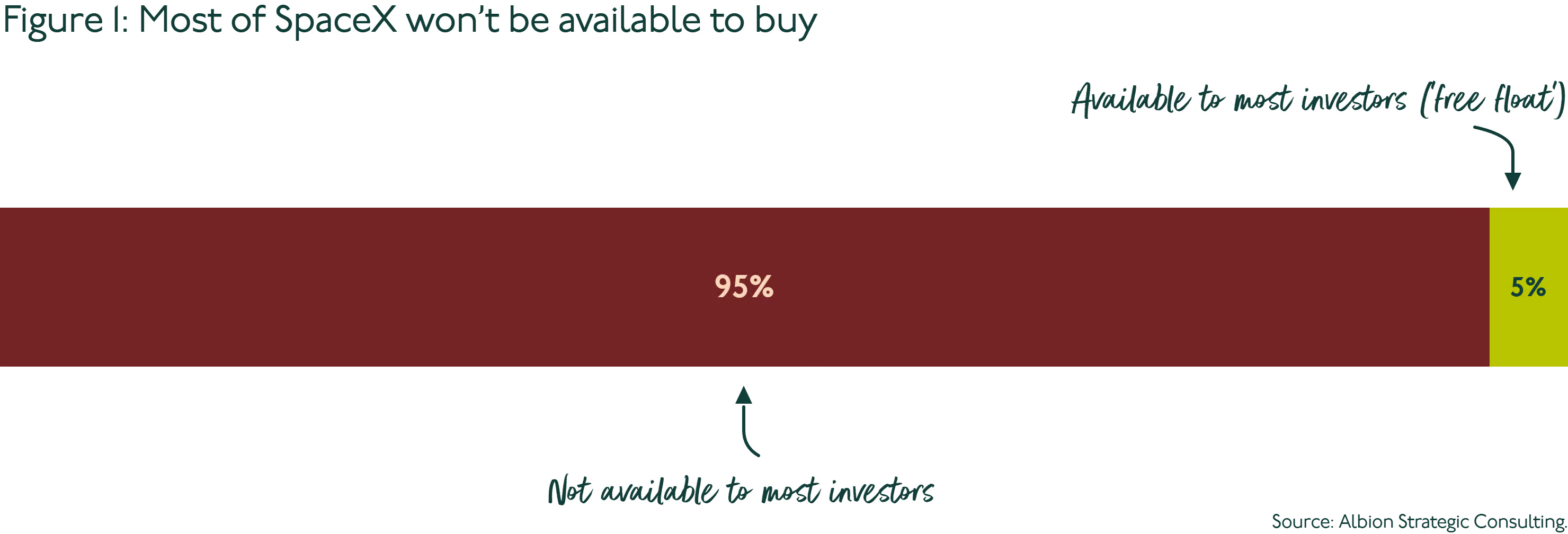
Most market indices, and the funds that track them, size companies based on how many of their shares are actually in circulation, not the company’s total value. A business worth hundreds of billions can still represent a tiny slice of your portfolio if only a fraction of its shares are available to buy. Saudi Aramco illustrated this in 2019: the biggest listed company in the world at the time, yet with less than 2% of shares floated, it barely registered as a meaningful holding for most investors.
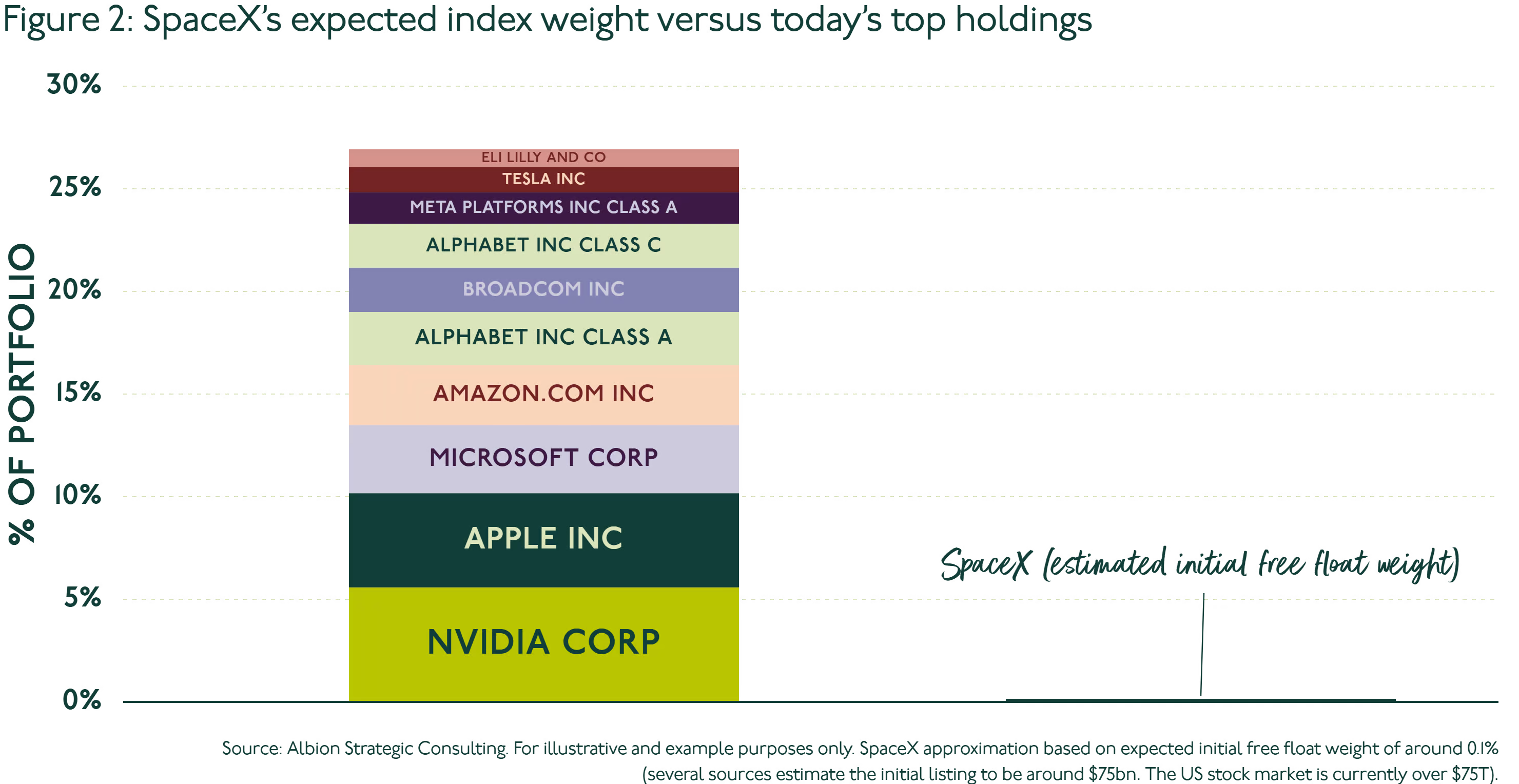
SpaceX follows the same pattern. The initial float is expected to be worth around $75 billion. With the US stock market currently worth over $75 trillion, that represents around 0.1% of the total market. With only 5% of the company’s shares initially available, the early exposure in most portfolios would be very small indeed.
Lock-ups and index timing
The initial float is rarely the full picture. When a company lists, existing shareholders are typically restricted from selling their own shares for a defined period afterwards. As those restrictions expire, more shares enter the market, the free float increases, and the company’s weight in indices and portfolios grows. This happens gradually, not all at once.
Index inclusion is not automatic either. The major providers apply specific criteria, including:
- A minimum size based on freely available shares (typically above $10 billion)
- A minimum free float percentage (typically 10% of the company, or above $2 billion).
Some fund managers also choose to delay investment in new listings, taking the view that share prices at IPO can be volatile and take time to settle.
How systematic investors approach IPOs
A systematic investment approach starts from the view that markets price in information quickly enough that it’s difficult to consistently spot and exploit mispricings. Rather than picking individual stocks, portfolios are built around well-evidenced characteristics: companies trading at a relative discount (value), or smaller businesses (small cap), that have historically delivered better long-term returns. This means a systematic portfolio’s exposure to any IPO will naturally differ from a simple index tracker.
For SpaceX specifically, the exposure will depend on how it trades once listed. If it behaves as a growth company, a value-tilted portfolio would likely hold it at an underweight relative to the broader market. If it exhibits more value-like characteristics, it could receive a proportionally higher allocation. How this plays out will become clearer once trading begins.
The bigger picture
The SpaceX, Anthropic and OpenAI IPOs are significant events. But their initial impact on most portfolios will likely be modest. A limited initial float, the rules governing how quickly they enter market indices, and the mechanics of systematic investing all mean that headline valuations don’t translate directly into portfolio exposure.
Over time, as additional shares become available and valuations settle, their influence may increase. Our Investment Committee will continue to monitor developments closely before, during and after the listings.


