


When most people think about investing, their minds naturally turn to shares in companies. After all, it is often the stories of the world’s biggest businesses that make the headlines.
Yet behind many well-constructed investment portfolios sits another asset class doing another important job: bonds.
Bonds rarely attract the same attention as equities. They’re often described as the “boring” part of a portfolio. However, when it comes to managing risk and providing stability, boring can be a very good thing.
What is a bond?
At its simplest, a bond is an IOU. When you invest in shares, you become a part-owner of a company. When you invest in a bond, you are lending money instead.
Governments and companies regularly borrow money by issuing bonds. In return for your loan, they agree to pay interest and eventually repay the original amount borrowed.
This sounds similar to a fixed-term savings account, but there’s an important difference: bonds can typically be bought and sold before they mature. This means their value can move up and down over time.
Why own bonds at all?
If equities have higher long-term growth potential, why not simply own shares? The answer lies in balance.
Investing is not always about achieving the highest possible return. More often, it’s about achieving the right return while taking an appropriate level of risk.
Bonds can help provide:
- Stability during periods of market uncertainty
- A smoother investment journey
- Diversification away from equities
- Greater confidence for investors drawing an income from their portfolio.
Think of a portfolio like a car journey: equities are the engine that helps you reach your destination, and bonds are part of the suspension system, helping smooth some of the bumps along the way.
Two things matter most
The bond market is vast and complex, but we can simplify its key characteristics into two areas.
1. How long are we lending for?
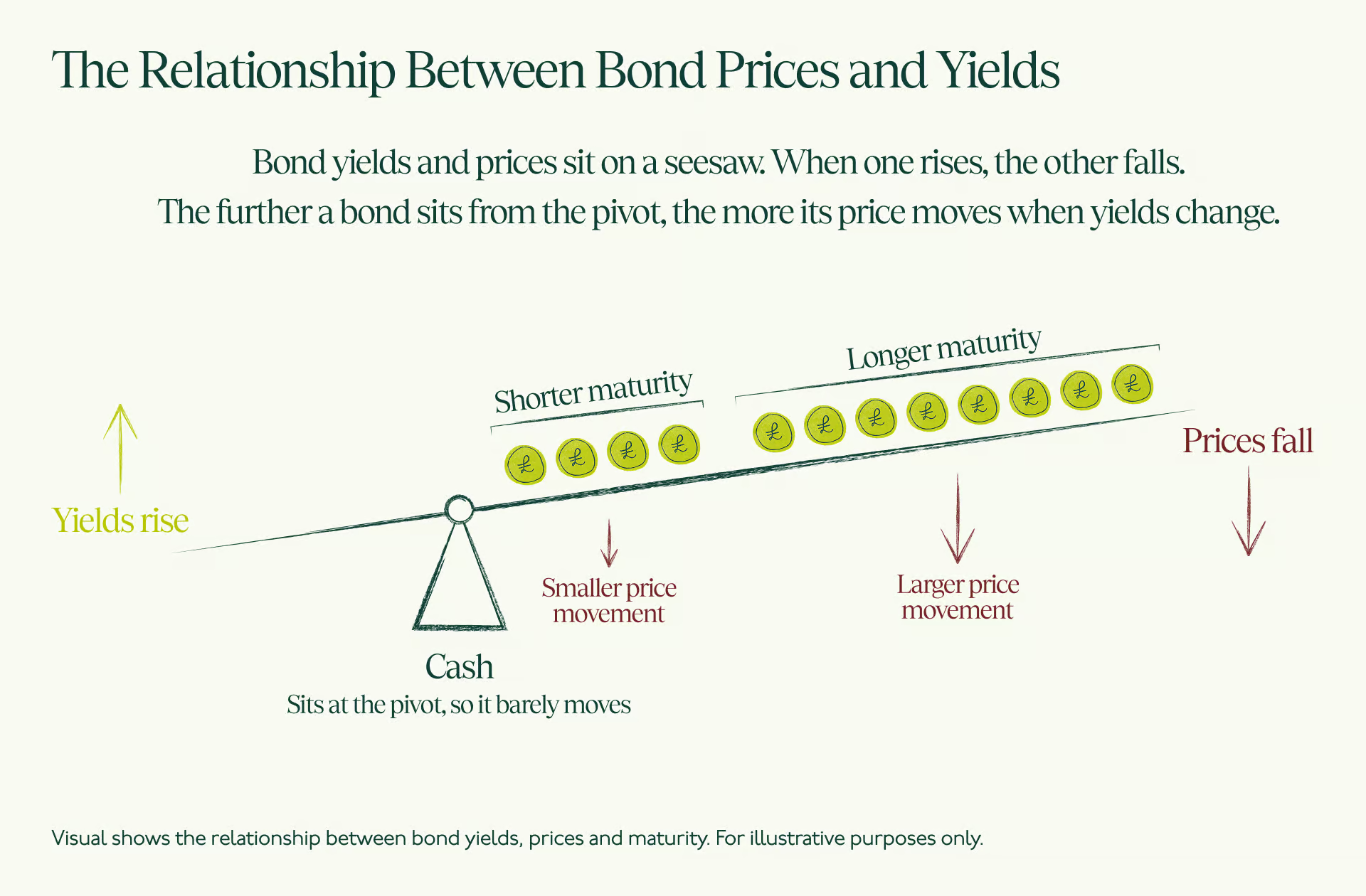
This is often referred to as “duration”. Generally speaking, the longer the loan period, the more sensitive a bond becomes to changes in interest rates.
A short-term bond might be relatively stable. A very long-term bond can experience much larger price swings.
2022 illustrated this well: rising inflation and interest rates drove significant falls in some longer-dated bonds, while shorter-dated bonds generally saw much smaller declines, because investors were due to receive their money back sooner.
The seesaw analogy
When bond prices rise, yields fall. When bond prices fall, yields rise: they move in opposite directions, much like a seesaw.
Understanding this relationship helps explain why bond prices can sometimes fall when interest rates rise, even though the long-term income available from new bonds may actually be becoming more attractive. It also highlights why longer-dated bonds are more affected than shorter-dated bonds.
It can feel counter-intuitive at first, but this relationship sits at the heart of how bond markets operate.
2. Who are we lending to?
This is known as “credit quality”. Lending to highly creditworthy borrowers, such as major governments, is generally considered lower risk. Lending to weaker borrowers may offer higher interest payments, but it also increases the risk that the borrower may struggle to repay the debt.
As with many areas of investing, seeking higher returns often requires accepting additional risk.
Not all bonds are created equal
The bond universe contains everything from short-term government bonds to lower-quality corporate debt. At Emery Little, our focus is on understanding the role we want bonds to perform within a portfolio.
If the objective is to cushion market declines and add diversification, higher-quality, shorter-dated bonds often provide characteristics that align well with that purpose. Lower-quality bonds, by contrast, can behave much more like equities during periods of market stress.
The role bonds are meant to perform in a portfolio, and which bonds can perform it, matters more than whether you own them at all.
Final thoughts
Bonds may never be the most exciting topic in investing. They don’t produce the dramatic headlines associated with technology companies or stock market rallies, but they play an important role in helping investors stay invested through all market conditions.
Combined thoughtfully with equities, bonds can help create portfolios that offer growth while managing risk in a way that aligns with an investor’s objectives and tolerance for uncertainty. The most valuable part of a portfolio is often the one that helps you stay confident enough to remain invested for the long term, not necessarily the one chasing the highest return.
This is for educational purposes only. It’s not personal financial advice and we’re not recommending any specific course of action. Everyone’s situation is different, and how bonds fit within your own portfolio depends on individual circumstances. You should seek professional financial advice before making any decisions.


